Community · 2026-10-19
Southwest Washington foreclosure help: call early and protect your deadlines
Ayuda para evitar la ejecución hipotecaria en el suroeste de Washington
Free counseling can help Washington homeowners understand mortgage notices and possible alternatives. Learn whom to call, why notice-specific deadlines matter, how mediation referrals work, and how to avoid foreclosure-rescue scams.
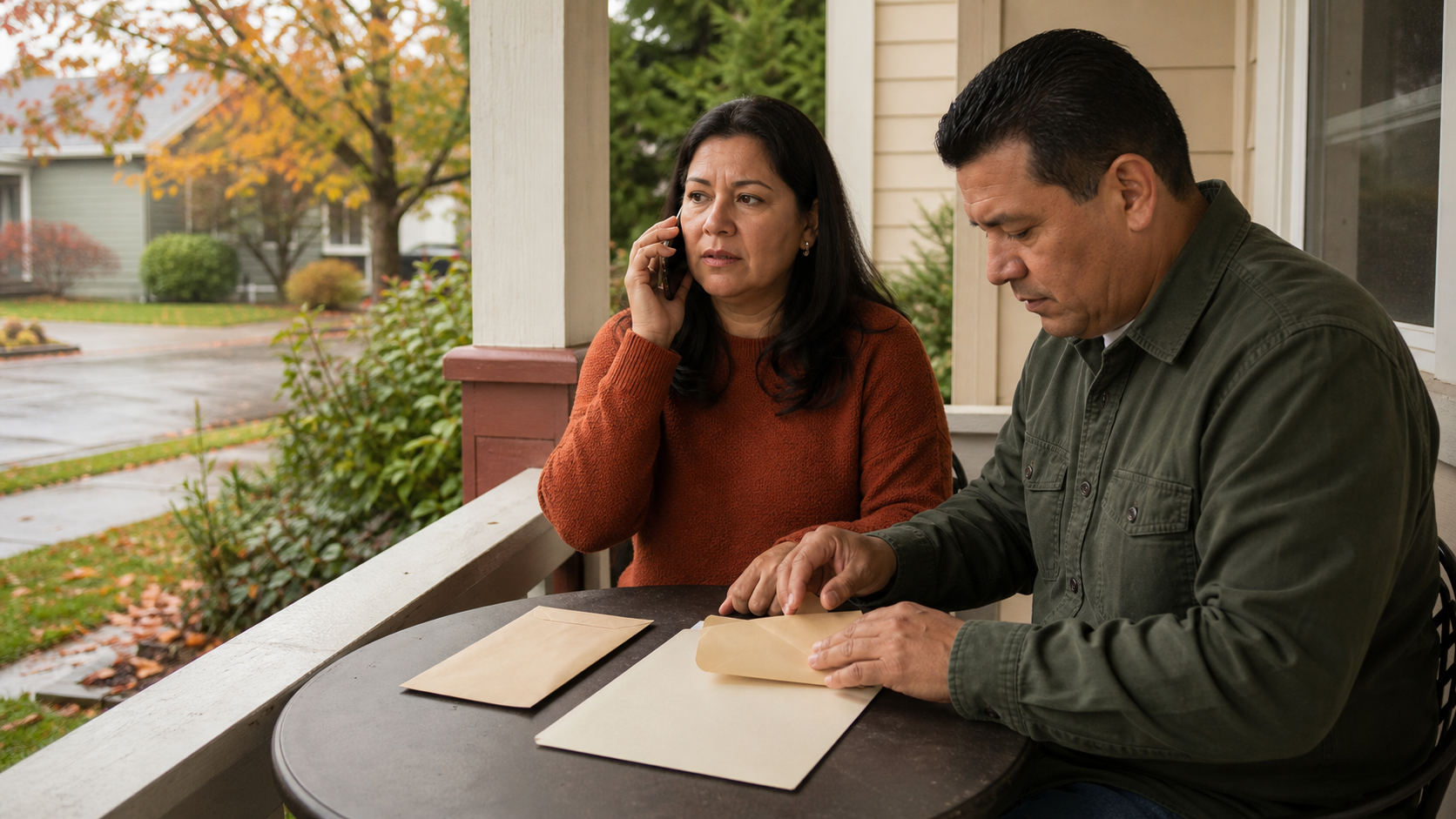
A missed mortgage payment can follow a job change, illness, or an unexpected bill. It does not mean you should stop opening mail—or pay a stranger who promises to save your home. For households in Vancouver, Camas, Longview and nearby Washington communities, Southwest Washington foreclosure help starts with an established referral service and a careful look at the actual notice you received. As checked October 19, 2026, the Washington State Housing Finance Commission and Washington Homeownership Resource Center (WHRC) both direct homeowners to 877-894-4663, the state homeownership hotline.
If a notice lists a sale date, or you have been served with legal papers, call immediately and ask about urgent counseling and legal help. Do not wait for the next payment due date. Calling a hotline is not, by itself, a legal filing or a guarantee that a scheduled sale stops. An appropriate counselor or attorney needs to assess your documents, applicable process, eligibility, and deadlines.
This article addresses Washington property, not Oregon foreclosure law. It is general education, not legal advice or a determination of anyone's right to mediation. A mortgage foreclosure, property-tax foreclosure and homeowners-association foreclosure can involve different rules. Tell the hotline which kind of debt and notice you have rather than applying one timeline to all three.
Southwest Washington foreclosure help: four steps to take now
- Save and identify every notice. Keep the envelopes, letters, emails and any recorded sale notice. Write down when you received them and photograph or scan complete copies. WHRC says knowing the notice's name helps its staff connect you with the appropriate response. Do not assume an ordinary late-payment reminder is the same as a Notice of Default or Notice of Trustee's Sale.
- Call WHRC at 877-894-4663. Tell the specialist your Washington county, whether you live in the home, the type of debt, and the exact title and date of each notice. WHRC can refer people to housing counseling, legal aid or government resources according to their situation. It says foreclosure-prevention counseling is free for the home you live in; counseling for an investment or vacation property may carry a fee. Ask directly about language assistance and how quickly you can connect with a counselor.
- Contact your mortgage servicer through a trusted number. The servicer is the company handling the loan's payments; it may differ from the original lender. The Consumer Financial Protection Bureau recommends using the number on your mortgage statement or the servicer's official website and calling as soon as you worry about paying. Explain what changed and whether the hardship is temporary or longer-term. Ask whether it has a mortgage-assistance application and what documents and deadlines apply.
- Get the next action and deadline in writing. Ask your counselor or attorney to identify the required response, correct recipient, delivery method and proof to keep. If you have a sale date or court papers, say so at the beginning of the call. Do not assume submitting an incomplete application, leaving a voicemail or asking about help automatically protects a deadline.
The notice's name matters more than a generic timeline
For the Washington nonjudicial mortgage process described by WHRC, three notices are particularly important. These are not interchangeable, and the brief explanations below do not cover every exception or type of foreclosure.
Notice of Pre-Foreclosure Options: respond promptly
A Notice of Pre-Foreclosure Options (NOPFO) explains a chance to meet with the lender or its representative to discuss alternatives. WHRC tells homeowners to request this “Meet and Confer” within 30 calendar days of the date on the notice, and recommends certified mail so there is proof of sending and receipt. Washington's RCW 61.24.031 includes the thirty-day response warning and describes initial-contact and meeting requirements.
Ask a counselor to read the notice with you, confirm how the applicable dates are calculated, and help make the request properly. This is not a universal 30-day rule for every foreclosure letter. Waiting until the last day makes it harder to resolve a wrong address, missing information, or delivery problem. A timely meeting request creates an opportunity to discuss options; it does not promise that the lender will offer a modification.
Notice of Default: ask about a mediation referral immediately
If you receive a Notice of Default (NOD), WHRC recommends immediate contact with a counselor or attorney. The Washington Department of Commerce says homeowners cannot self-refer to its foreclosure mediation program: a housing counselor or attorney must assess eligibility and make the referral. Some lenders are exempt, so merely receiving an NOD does not establish that every borrower qualifies.
Notice of Trustee's Sale: do not read “90 days” as time to wait
A Notice of Trustee's Sale (NOTS) includes the scheduled auction date. Under RCW 61.24.163, the ordinary deed-of-trust mediation-referral window opens after the NOD and ends no later than 90 days before the sale date listed in the NOTS. That is not an instruction to wait 90 days after receiving the notice. Amended notices and other circumstances can have different rules, including a shorter statutory window after certain stays.
Have a counselor or attorney examine the actual notice immediately. Do not calculate eligibility from this article alone or assume a missed window leaves no options. A professional can evaluate the situation, other available assistance and whether urgent legal action is appropriate. HOA/condominium-association and property-tax processes should be assessed separately.
What counseling and mediation can—and cannot—do
A legitimate housing counselor can help you organize a household budget, prepare a complete assistance application, communicate with the servicer, and understand options. CFPB lists possible options such as repayment plans, forbearance, modification, a short sale or a deed-in-lieu. These are possibilities to discuss, not an offer, an entitlement, or interchangeable solutions. The servicer determines which options it can offer under the loan and program rules.
Mediation is a structured discussion with a neutral mediator about possible alternatives to foreclosure. Commerce says it aims for a voluntary negotiated agreement; neither the counselor nor the mediator can guarantee you will keep the home. Free counseling does not mean mediation itself is always free. Commerce says the homeowner and lender generally each pay half the mediation fee, with additional fees possible for more sessions. Ask about your expected costs, any waiver or assistance, and payment deadlines before participating.
A practical preparation folder might include your notices and envelopes, recent mortgage statements, income and expense information, prior assistance correspondence, and proof of submitted documents. This is a starting organizer—not a universal required-document list. Ask the counselor or servicer for the actual checklist and submission instructions, and protect sensitive information rather than sharing it with unsolicited callers.
Language access and scam checks
WHRC's foreclosure-prevention page offers a Spanish-language pamphlet alongside English and other languages. Commerce also links a Spanish explanation of the process. These can help you prepare questions, but do not guarantee that every referred professional or appointment is bilingual. Tell the hotline your preferred language and ask how interpretation or translated materials can be arranged. If you do not understand a notice or agreement, ask for a reliable explanation before signing.
The CFPB's scam warnings include upfront charges for promised rescue, guaranteed modifications, requests to sign over title, fake government affiliation, and instructions to stop paying or send mortgage payments to someone other than the servicer. Do not follow an unsolicited “stop paying” instruction. Verify any proposed plan with your actual servicer and counselor. If you already paid or signed something suspicious, contact WHRC promptly and ask about legal assistance and reporting routes.
If selling becomes part of the plan
Keeping the home may be the goal, but an informed discussion can also include sale alternatives. If the mortgage balance, foreclosure timing or a proposed short sale is involved, get individualized legal, tax and real-estate advice before committing. A listing or buyer's promise does not automatically resolve a foreclosure. Ask the professionals to coordinate the payoff, any required lender approval and the actual legal deadlines.
For a home in Oregon, start with OHCS's separate Foreclosure Avoidance Program rather than transferring Washington's notice rules across the river. For Washington homeowners, the immediate starting point remains 877-894-4663: bring the notice, ask for a counselor or attorney, verify the next deadline, and avoid anyone promising a guaranteed rescue.
Educational information only; verify current program eligibility with the source.