Buying · 2026-10-05
Camino a Casa orientations: a first step for Oregon homebuyers
Camino a Casa: cómo empezar a prepararte para comprar una vivienda
Hacienda CDC lists October 7 English and October 28 Spanish virtual Camino a Casa orientations. Learn how to register, prepare useful questions, and check next steps without assuming loan or assistance eligibility.
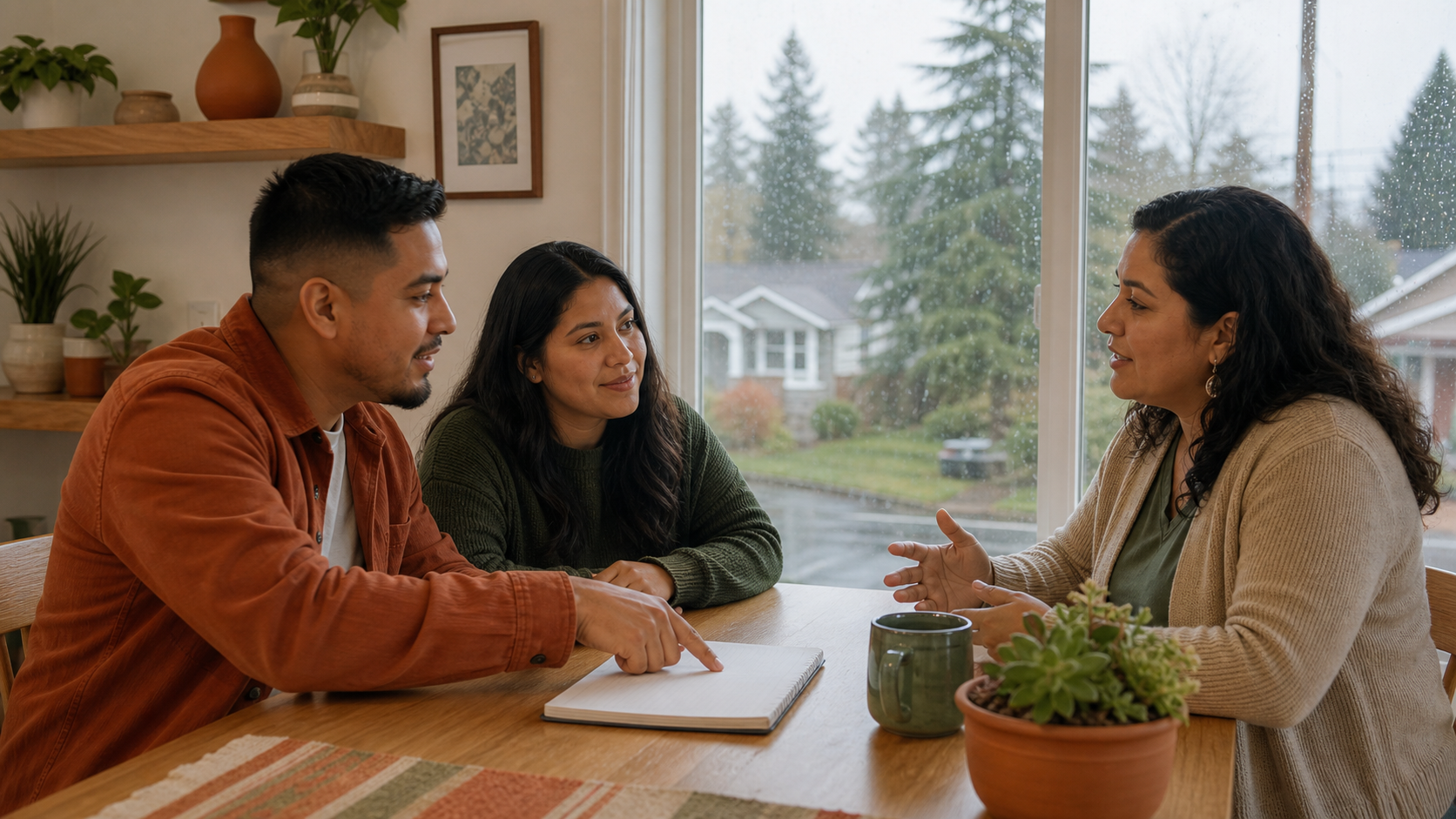
If buying a home in Oregon feels like a maze of credit scores, savings targets, and unfamiliar paperwork, a conversation with a housing counselor can be a more useful first move than looking at listings. For people searching for an Oregon bilingual homebuyer orientation, Hacienda Community Development Corporation's Camino a Casa program currently lists two virtual starting points: an English session on Wednesday, October 7, 2026, and a Spanish session on Wednesday, October 28, 2026. Both are listed for 6:00–7:00 p.m. Pacific time. These are dates shown on Hacienda's pages as checked October 5; confirm the current schedule and registration before making plans. Hacienda's English event and Spanish event have the details.
This is not a promise of a mortgage, a grant, or a place in a particular program. It is a concrete way to ask what to do next, in a language that works for you.
What Camino a Casa offers—and what an orientation is
Hacienda says Camino a Casa works with prospective buyers through financial coaches and HUD-certified housing counselors. Its description includes one-on-one coaching about credit, financial stability, and long-term goals; mortgage-readiness and financial-fitness workshops; and education about the homebuying process. It also describes possible help with closing costs or matched savings through particular programs, while explicitly saying eligibility varies by program. Do not turn the mention of an opportunity into an assumed award.
On both October event pages, Hacienda calls the orientation the mandatory first step for someone seeking its services. That is a sequence within Hacienda's program, not a general Oregon law requiring every homebuyer to take this particular class. Attending an orientation is also different from completing later education, being approved for financing, or receiving any assistance. Ask Hacienda what happens after you attend and whether your household and intended purchase area fit any services currently offered.
Oregon bilingual homebuyer orientation: how to register
Choose the October 7 English virtual orientation or the October 28 Spanish virtual orientation. Hacienda's event pages direct people to call its Economic Opportunity office at (503) 961-6432 or use the linked registration form. The form itself offers English and Spanish language choices. A listing does not establish that a seat is still available, so verify confirmation and the connection details directly with Hacienda. If neither date works, ask about a future session rather than assuming the calendar will stay the same.
When you call or register, three useful questions are: “Is this the first step for my situation?” “What language will the follow-up coaching use?” and “What should I bring or prepare for the first counseling conversation?” If accessibility, an interpreter, or a different time is important, ask the organizer directly. The existence of a Spanish event does not establish that every subsequent service or outside lender interaction will be in Spanish.
Five practical things to prepare before you meet a counselor
You do not need to have the perfect financial picture before seeking guidance. In fact, Oregon Housing and Community Services (OHCS) says one-on-one housing counselors can help people who are unsure whether they are ready to buy. Before a conversation, gather enough information to make your questions specific; ask the counselor what documents, if any, they actually require and how they protect them.
- Sketch a monthly budget. Record take-home income, rent, recurring debt payments, transportation, childcare, utilities, and other obligations. A comfortable home payment must fit the household's real life—not just a lender's possible maximum.
- Map your savings and planned expenses. Think beyond a down payment: moving, inspections, closing costs, maintenance, insurance, property taxes, and an emergency cushion also matter. Ask which amounts are estimates and which will be known only for a specific property and loan.
- List credit and debt questions. If there are errors on a credit report, payments you are catching up on, or a debt that could change your plan, bring the question. Do not assume a single score makes you eligible or ineligible for every loan.
- Identify the income information you can explain. If your work is hourly, seasonal, self-employed, or spread across jobs, ask what a lender might request and how a counselor can help you prepare. A counselor cannot guarantee a lender's decision.
- Write down the household's priorities. Where do you need to live? What commute, space, accessibility, school, or family considerations matter? There is no single “Latino household” buying pattern; describe what matters to your household.
OHCS describes housing counseling as help with financial preparation, understanding loan products, finding a home, and maintaining it after purchase. Its page also points to homeownership centers around Oregon. The point of preparing this list is to make that help more concrete, not to send sensitive records to a blog or an unfamiliar intermediary.
What to ask after the orientation
A strong next step is a written, realistic plan, not an instant application to every advertised offer. Ask how to schedule one-on-one counseling, which homebuyer education applies to your situation, and whether the counselor can explain a full housing budget that includes principal, interest, taxes, insurance, possible association dues, and upkeep. If someone mentions assistance, ask which program administers it, whether funding is open, what geography and household rules apply, whether it is a grant or a repayable loan, and what happens if funds run out. Ask a lender for individualized written estimates when you are ready to compare options; an event listing is not a loan quote.
For Oregon households, the OHCS housing-counseling page is another official place to find a counselor. It is separate from Hacienda's orientation. If you live in Southwest Washington, ask Hacienda whether it can serve your household or refer you appropriately—its October event pages do not establish Washington eligibility. The Washington State Housing Finance Commission's class calendar lists Washington-sponsored classes, including Vancouver-area offerings; check each listing's language and registration directly instead of assuming they are Spanish-language or interchangeable with Hacienda's program.
What this means for buyers and sellers
For buyers: a verified orientation can help turn an uncertain goal into questions about readiness, language access, and next steps. It is worthwhile even if you are months from shopping, but it does not commit you to a purchase or qualify you for aid. For sellers and professionals: point prospective buyers to the organizer's current event page and encourage them to confirm their own counseling and financing. Do not describe a buyer as “approved” because they attended an introductory session.
Start here: Read Hacienda's Camino a Casa overview; choose the English or Spanish listing; call (503) 961-6432 or follow the organizer's registration link; confirm the time, language, availability, and next step. Program dates and rules can change. This article is general education, not individualized legal, tax, real-estate, or lending advice.
Educational information only; verify current program eligibility with the source.